
Digital Citizenship Education from a Christian Perspective
Helping Christian schools respond to EU guidelines with biblical clarity
As digital technology increasingly shapes education and social life, the European Union has called schools to intentionally prepare students for life as digital citizens. The Council of Europe’s framework, “Easy Steps to Help Learners Become Digital Citizens” (2023), defines three domains for development: Being Online, Well-Being Online, and Rights Online.
But what does digital citizenship mean for Christian schools whose mission is grounded in Scripture rather than in secular definitions of the human person and society?
A Biblical Foundation for Digital Citizenship
In a new interpretive guide, “Digital Citizenship Education – from a Christian Perspective,” EACE members Paul Madsen (ACSI Europe) and Christian Baldauf (VEBS) help Christian educators engage the EU framework through a distinctly biblical worldview.
While the EU document focuses on interpersonal and intrapersonal relationships, this Christian adaptation begins with the vertical relationship with God, which is foundational to all others. Our actions and behaviors in digital spaces, like every other area of life, must reflect God’s nature, His design for creation, and His redemptive purposes revealed in Scripture.
To support this, the guide reframes digital citizenship around the biblical understanding of reality:
-
Creation – Recognizing the goodness of God’s creation and our role as His image-bearers in relationships, creativity, and stewardship.
-
Fall – Understanding the brokenness of human nature and digital spaces through sin.
-
Plan of Salvation – Celebrating redemption and restoration through Jesus Christ and the indwelling Spirit that enables right relationships.
-
Eternity – Looking forward to restored communion in God’s kingdom and modeling this through Christlike community online and offline.
Redefining Key Terms Biblically
The guide takes the next step to carefully define seven key terms used loosely in the EU’s Digital Citizenship Education (DCE) framework. Citizenship, reliability, creativity, diversity, health, responsibility, and ethics must each be grounded in Scriptural truth. For example:
-
Citizenship reflects belonging and participation first in God’s Kingdom, then in earthly communities.
-
Creativity mirrors God’s nature by shaping culture as faithful stewards of God's gifts, not autonomously.
-
Diversity celebrates God-designed variety ordered toward unity in Christ.
A Practical Tool for School Leaders
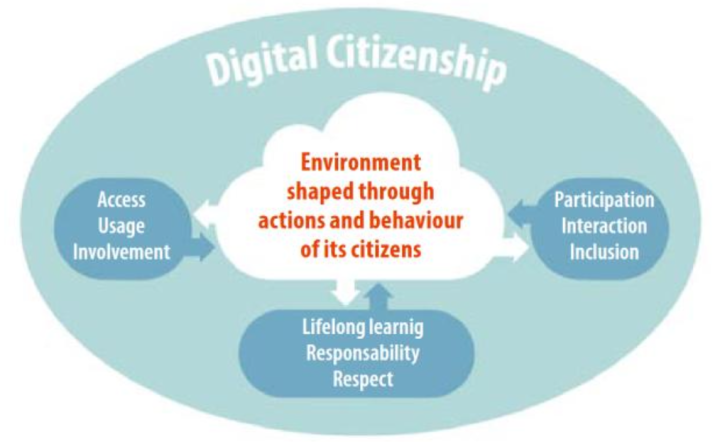 Building on these definitions, the guide then provides a biblically informed checklist that parallels the EU’s own DCE tool. This version helps schools assess where students and teachers are forming, developing, maturing, or flourishing in their use of digital technology, all under God’s revealed truth.
The resource invites schools to:
-
Clarify terminology before adopting secular educational policies.
-
Evaluate their current digital citizenship practices in biblical perspective.
-
Use a shared Christian vocabulary to learn and collaborate across Europe.
Moving Forward
Christian educators are not called merely to react to government guidelines but to shape education proactively on the foundation of God’s revelation. This guide equips schools to confidently say, “We are already engaging Digital Citizenship Education from a Christian perspective and can define our development steps accordingly.”

Strong and Courageous: The Impact of SLC 2026
This last month, students and teachers from Christian schools across Europe gathered for the 2026 Student Leadership Conference (SLC). Over three events, two weeks in Hungary and one in the UK, young people from more than 50 Christian schools worshipped together, studied God's Word, attended practical leadership workshops and met in small discussion groups led by their peers.
Spain's Christian Schools Take Steps Toward a National Federation
Evangelical Christian schools in Spain are preparing to take a significant step together. At the 5th Forum on Christ-Centred Education, held in Barcelona on 30–31 October 2026, educators will be presented with a project to form a national federation of Protestant Christian schools.
The week after SLC
The week after SLC or any event that challenges student growth is a huge opportunity - don't miss it! Many of our students are teenagers in European schools where living out a Christian faith can be difficult, where speaking up takes courage that does not come naturally, where identifying as a Christ-follower may not be received be warmly. How will we as teachers and school leaders engage them in their next steps of faith and leadership?
ACSI Europe Art Show Winners 2026
We would like to congratulate all the wonderful students who participated in our first ACSI Europe Art Show responding to the theme of "Your word is a lamp to my feet and a light to my path.". We were very encouraged to receive over 60 art pieces from schools all across Europe — a remarkable debut for this new tradition.
